03 · Pablo (Komu AI) · usapablo.com
An AI financial assistant that lives in WhatsApp
I co-founded Pablo and designed the product experience from research to MVP, including the WhatsApp conversational UX, landing page and dashboard.
The challenge was to help people understand and manage their finances without asking them to learn an entirely new tool first.
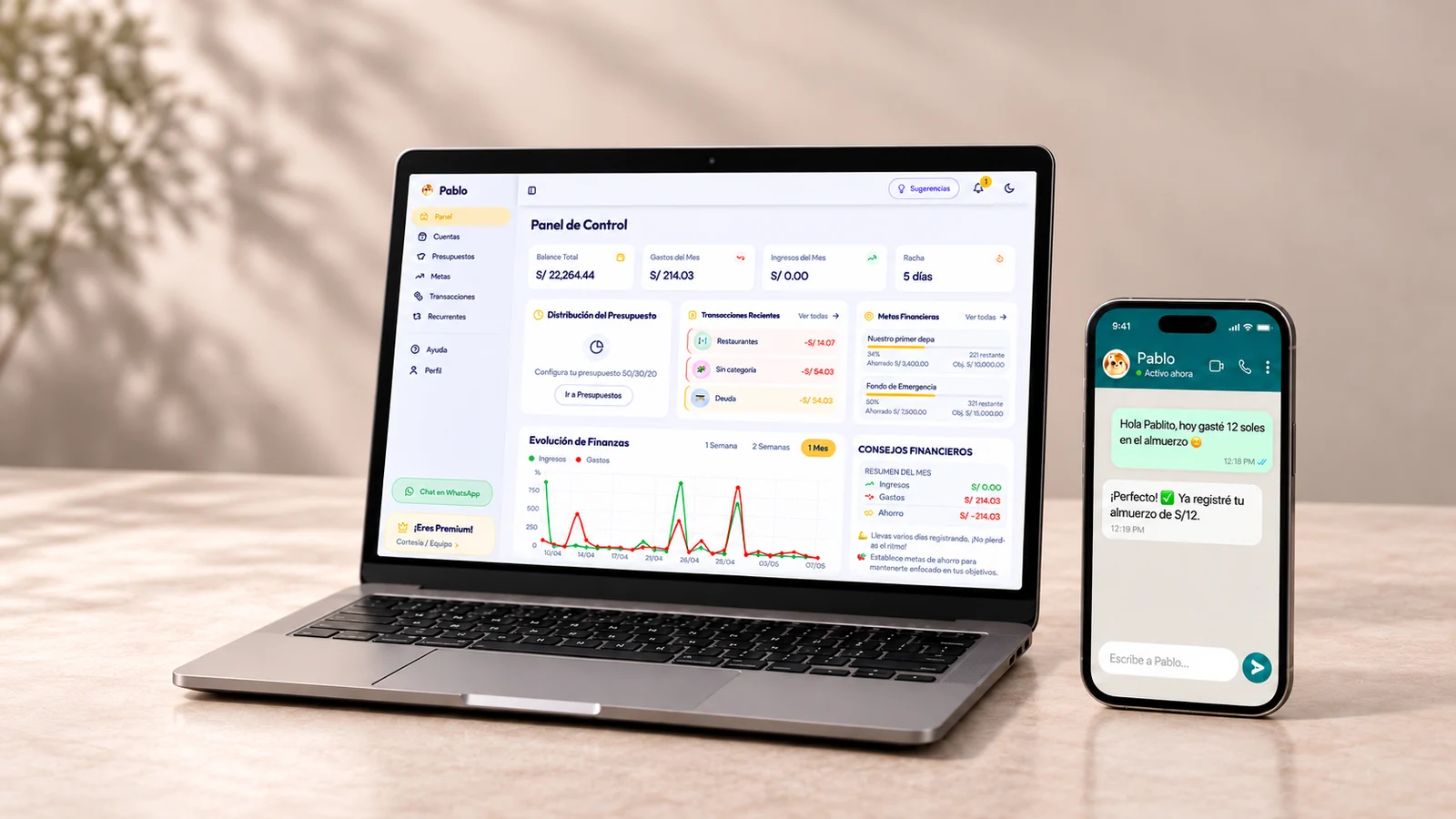
An AI financial assistant that lives in WhatsApp
The challenge
Many people want to get their finances under control, but drop off when doing so requires too many steps, too much discipline or another tool outside their existing routine.
My role
I co-founded the product and worked across research, product strategy, conversational UX, MVP definition, landing page and dashboard.
Outcome
150% increase in paid-plan adoption during the first three months of the new version.
+150%paid-plan adoption in the first 3 months
3surfaces designed: chat, dashboard and landing
WhatsAppas the entry point, the space people already used every day
Research → MVPI designed the product from research through to MVP definition
01
Context and problem
Managing personal finances requires consistency: tracking expenses, reviewing transactions, understanding where money goes and making decisions from that information.
The challenge was not simply giving people access to financial data. It was making financial management simple enough to become part of their routine.
From the beginning, I wanted to avoid building another tool that required users to completely change their habits before they could benefit from it.
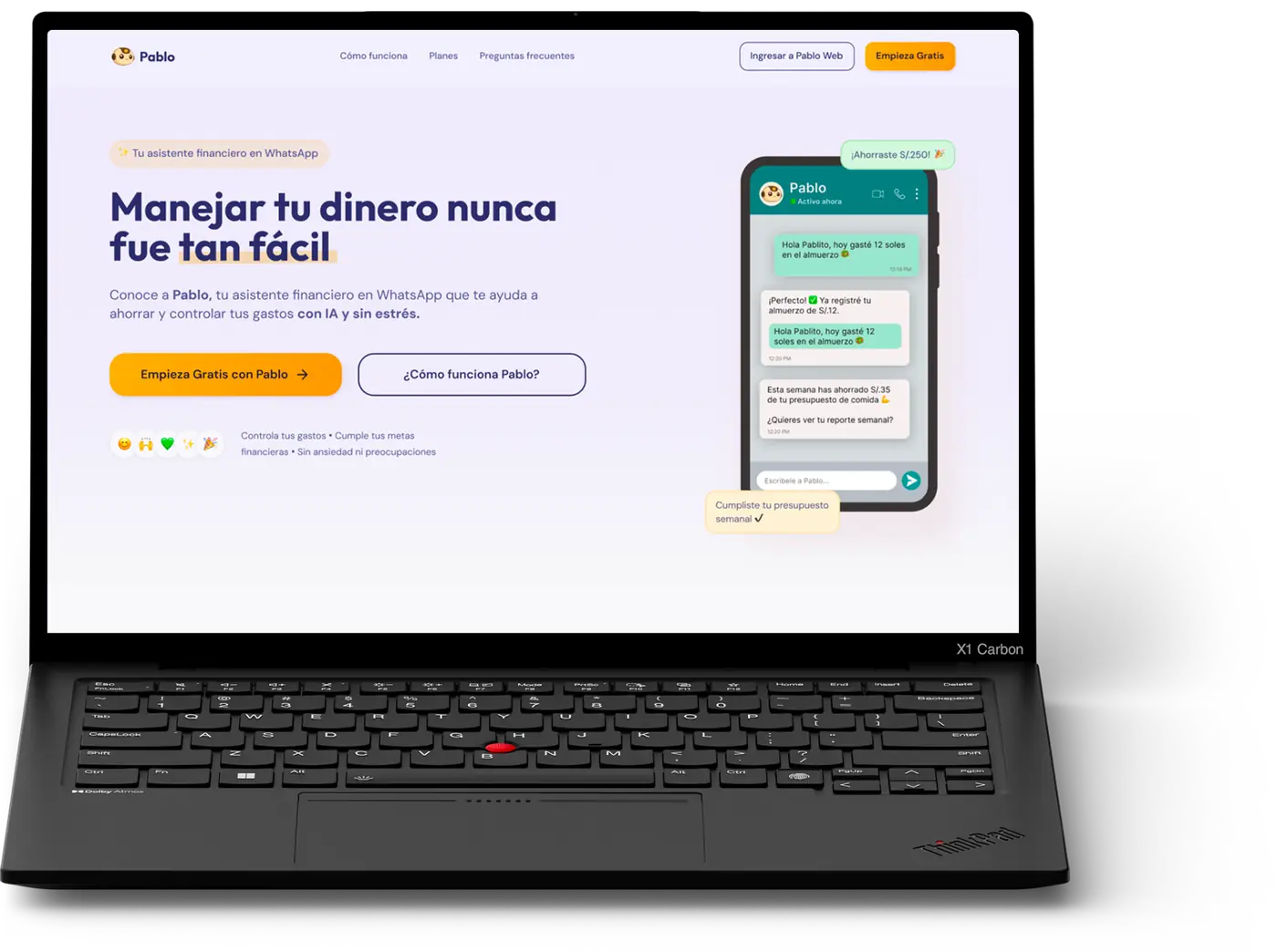
Pablo’s landing page and WhatsApp conversation.
02
Research and why WhatsApp
The project started with research into how people actually managed their money, what they tried to keep track of, where they struggled to stay consistent and which tools were already part of their everyday lives.
One pattern kept coming up: the challenge was not only knowing what to do with money, but maintaining the habit of doing it.
That led to an important product decision. Instead of asking people to add another app to their routine, I could bring the experience into a space they were already using every day: WhatsApp.
WhatsApp was not chosen only as a channel. It was a product decision designed to reduce the gap between wanting to manage your finances and actually building the habit.
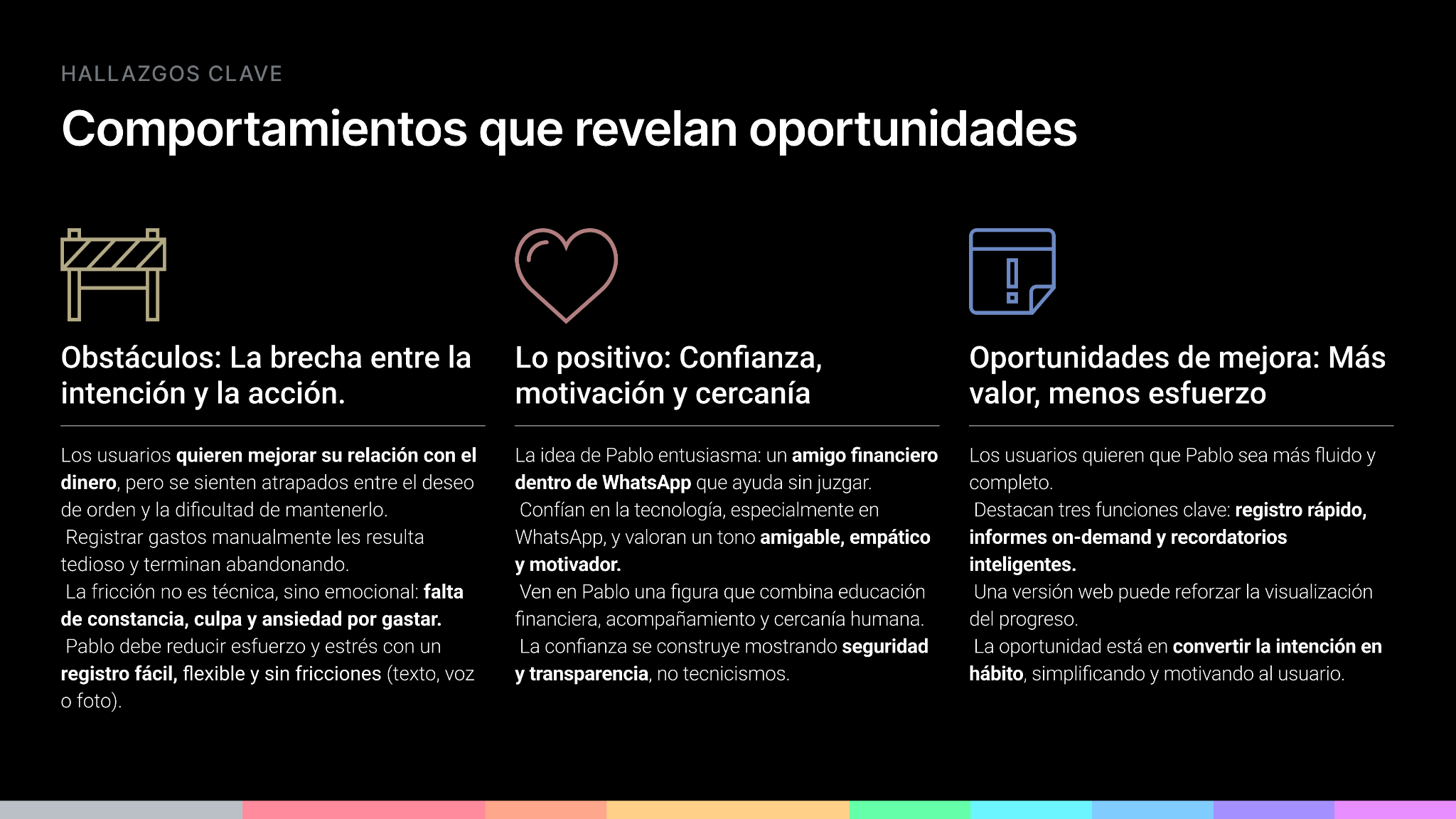
Research synthesis: obstacles, trust and opportunities for improvement.
03
Design decisions
01Start without learning a new tool
WhatsApp allowed the first interaction to happen in an environment people already understood.
Decision
Keep initial setup to a minimum and help users reach a useful first action quickly.
02Guide without turning the conversation into a form
Conversational interfaces could simplify tasks, but too many questions in a row could feel like another administrative process.
Decision
Ask for information progressively and make it clear why Pablo needed each piece of information.
03Build trust before automating
When a product deals with money, a fast answer is not enough. Users need to understand what is happening and stay in control of their decisions.
Decision
Use clear language, confirm important actions and avoid making the AI appear to make financial decisions on the user’s behalf.
04Show value before asking for commitment
The value proposition needed to be clear before asking users to move toward a paid plan.
Decision
Design the experience so users could understand its value before reaching the conversion moment.
04
Landing, signup and dashboard
Together with the team, I designed a landing page to clearly explain what Pablo was, its value proposition and how to get started.
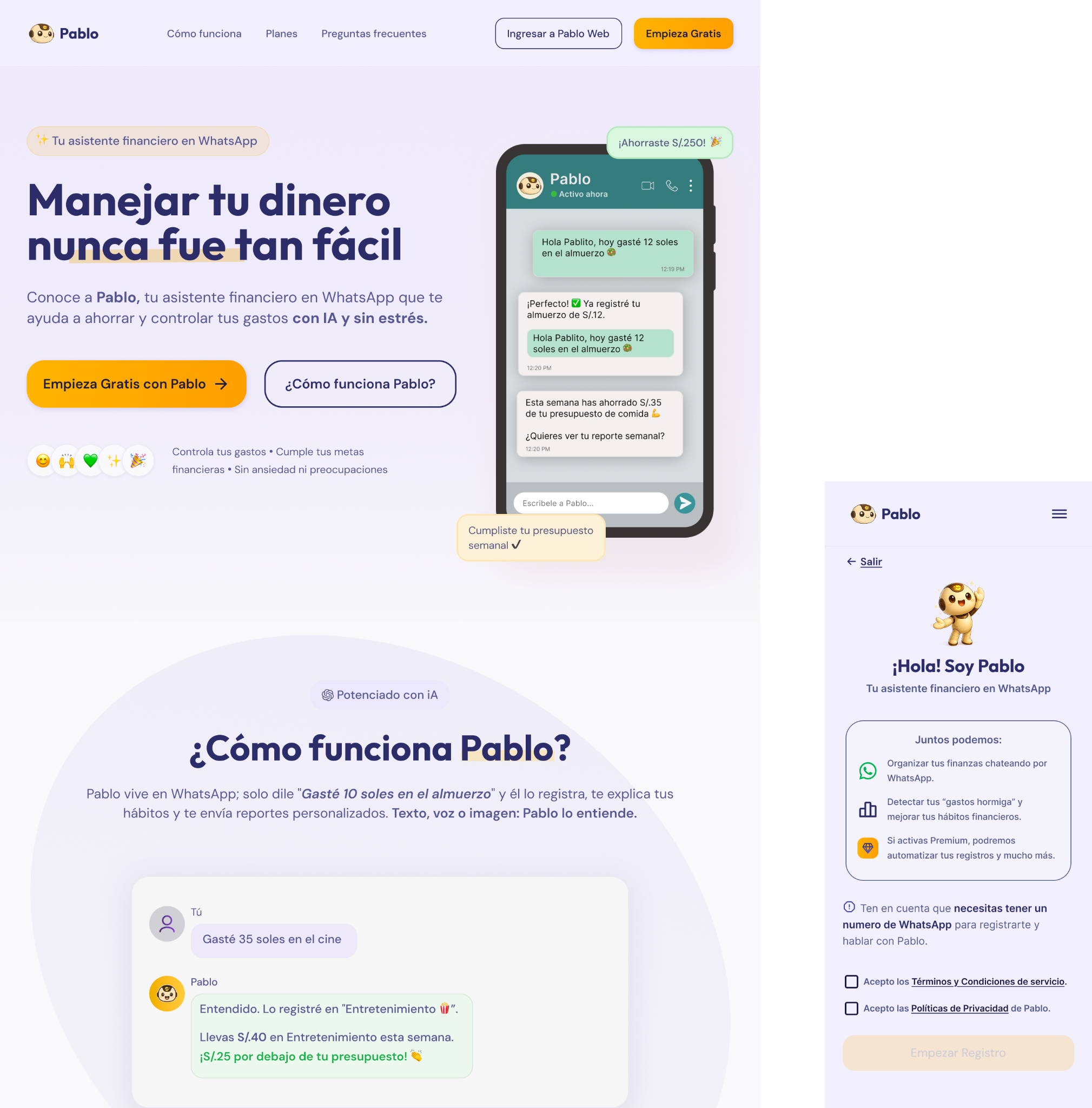
Views of Pablo’s landing page and signup.
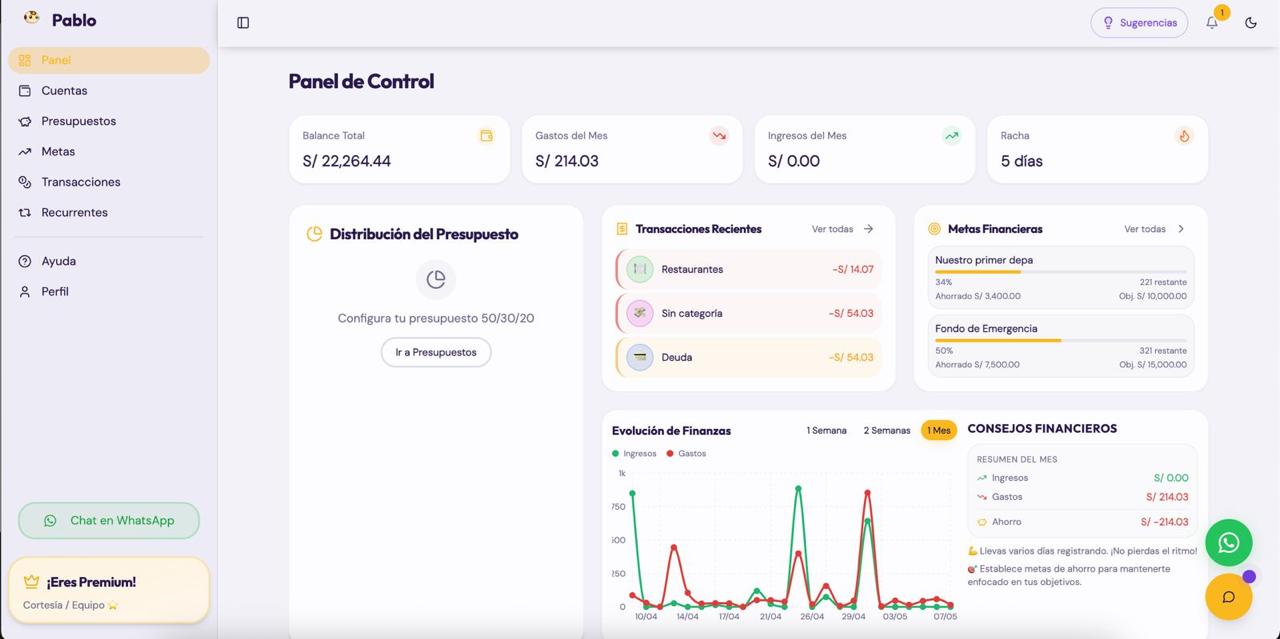
Pablo dashboard: personal finance control panel.
05
Outcome
After launching the new version, paid-plan adoption increased by 150% during the first three months.
This mattered because it connected a product decision (reducing entry friction and demonstrating value before asking for commitment) with a real business metric.
Pablo evolved from being only a WhatsApp conversation into a product with multiple touchpoints built around the same experience.
06
AI in the process
AI had two different roles in Pablo. It was part of the product I was building, and it could also help accelerate parts of my design process. In both cases, human judgment remained essential.
AI in the product
AI helped create a more flexible conversational experience and work with information in the context of each user.
But it should not replace decisions that belonged to the person or present a generated answer as unquestionable truth.
AI in my process
I used AI tools to explore alternatives, organize information and speed up specific parts of the design process.
Product, prioritization and experience decisions were still grounded in research, data and discussion with the team.
07
Learnings
- The channel is also a product decision.
Choosing WhatsApp removed an important barrier: people did not need to adopt another tool before getting value. - A simple conversation can hide a lot of complexity.
Conversational UX requires deciding what to ask, when to ask it and how much context someone actually needs. - In financial products, trust and clarity matter more than novelty.
AI could make the experience more flexible, but users still needed to understand what was happening. - Business outcomes are also part of design.
The increase in paid-plan adoption showed that improving the experience and reducing friction could have an impact beyond the interface.
Next case