06 · Kindberry · Children’s clothing and community
Shopping for clothes, joining a community and keeping the freedom to choose
I designed a children’s clothing e-commerce experience connecting shopping with membership and community. Research helped balance trust, time and freedom of choice with business goals.
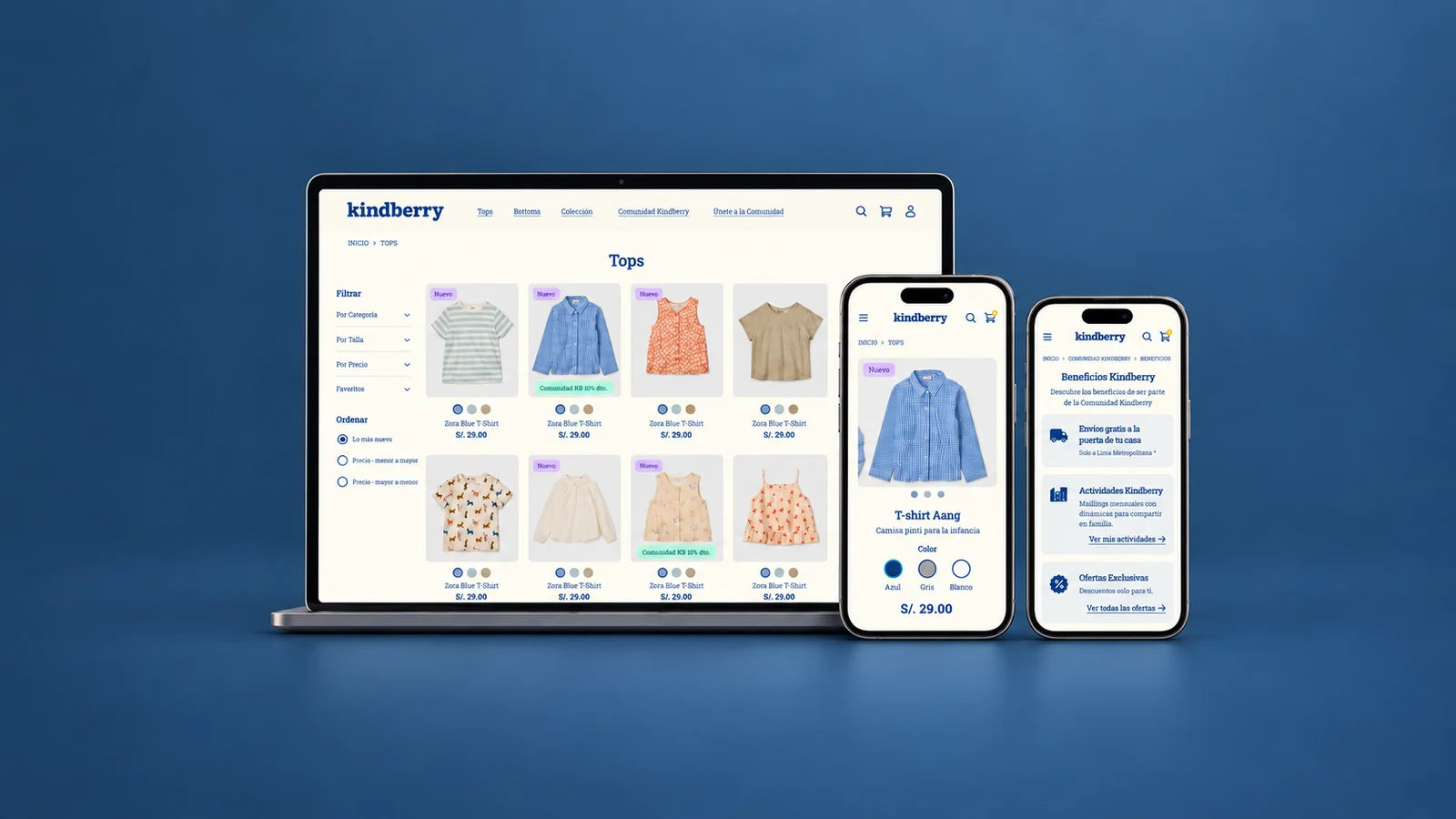
Shopping for clothes, joining a community and keeping the freedom to choose
The problem
Families need to choose clothes confidently with limited time. Community and membership needed to offer value without imposing unnecessary purchases.
My role
I connected research synthesis, business goals and user stories with flows and interface proposals for web and mobile.
Outcome
A proposal connecting the catalogue, product details, cart, membership and benefit management. The evidence shown documents the process and design, rather than conversion results.
2documented archetypes: Alejandra and Lucía
3epics: shopping, membership and community
26user stories in the backlog
Web + mobileinterface proposals
01
More than a clothing store
Kindberry combines children’s clothing with a community proposition: benefits, shopping credits and activities connected to clothing circularity. The challenge was making that relationship understandable without distracting from the main task: finding suitable clothes.
I approached the experience as a system: discovering products, making a purchase, exploring membership and managing benefits needed to connect while keeping a clear purpose at each stage.
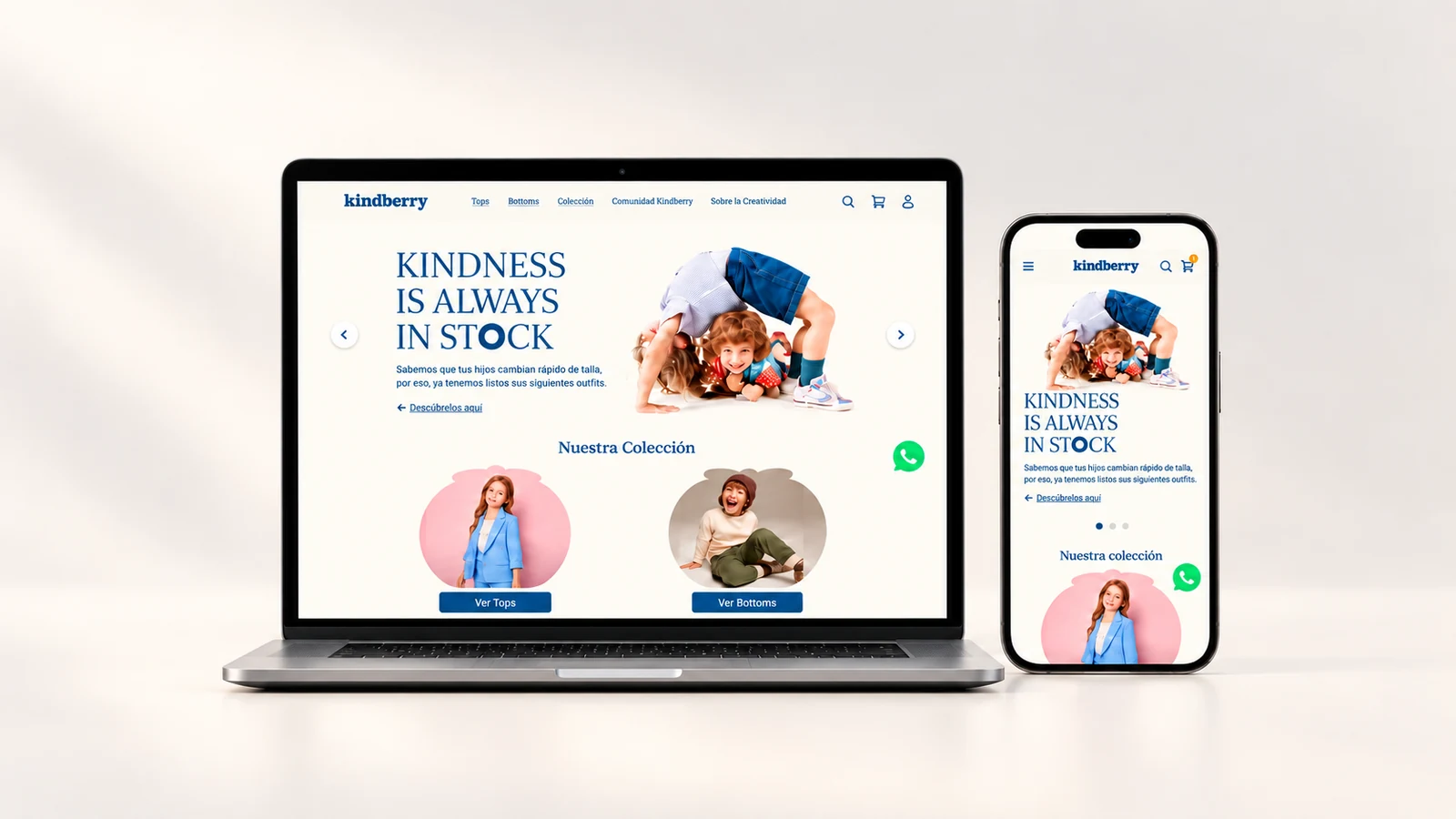
Kindberry Home: composition of the web and mobile proposals.
02
Understanding how families shop
The empathy map and archetypes helped organise motivations and friction. Alejandra prioritises time, quality and support after purchase. Lucía also considers budget, sustainability, reuse and trust in the brand’s promises.
Both perspectives point to a shared need: clear information for decisions and flexibility to shop when needed. An ongoing relationship with the brand does not mean an obligation to replace clothes every month.
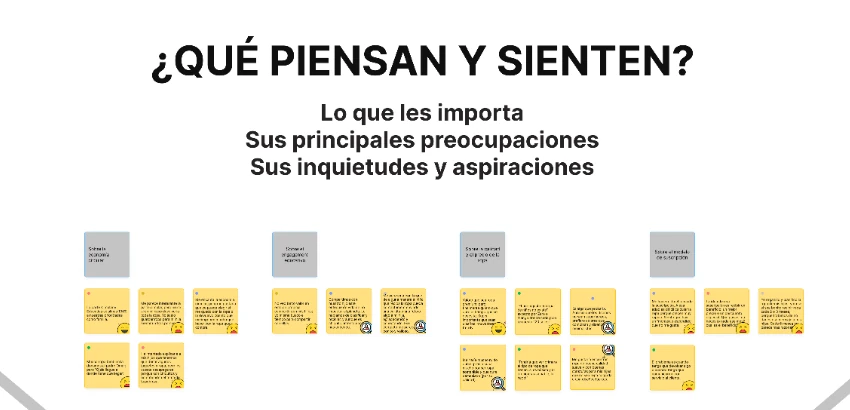
Empathy map excerpt: shopping concerns and motivations.
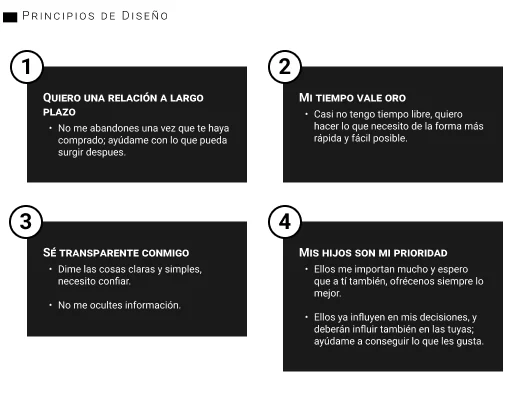
Principles from the Alejandra archetype: time, transparency and an ongoing relationship.
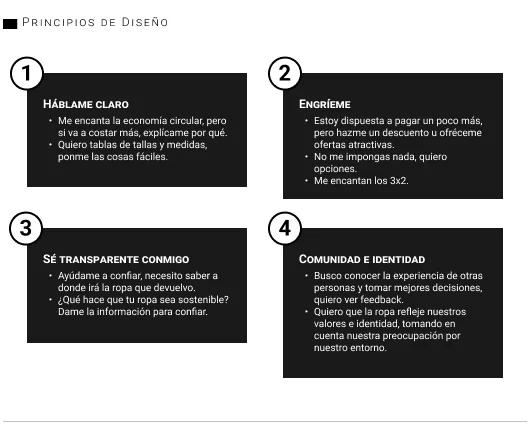
Principles from the Lucía archetype: clarity, choice and community.
03
The experience continues after payment
The Customer Journey Maps cover the need, search, purchase and what happens afterwards. They make sizing and quality concerns, delivery issues and the need for exchanges or a second life for clothes visible.
This led to treating product information, help and tracking as part of the shopping experience. Circularity also needs an understandable journey, beyond a brand promise.
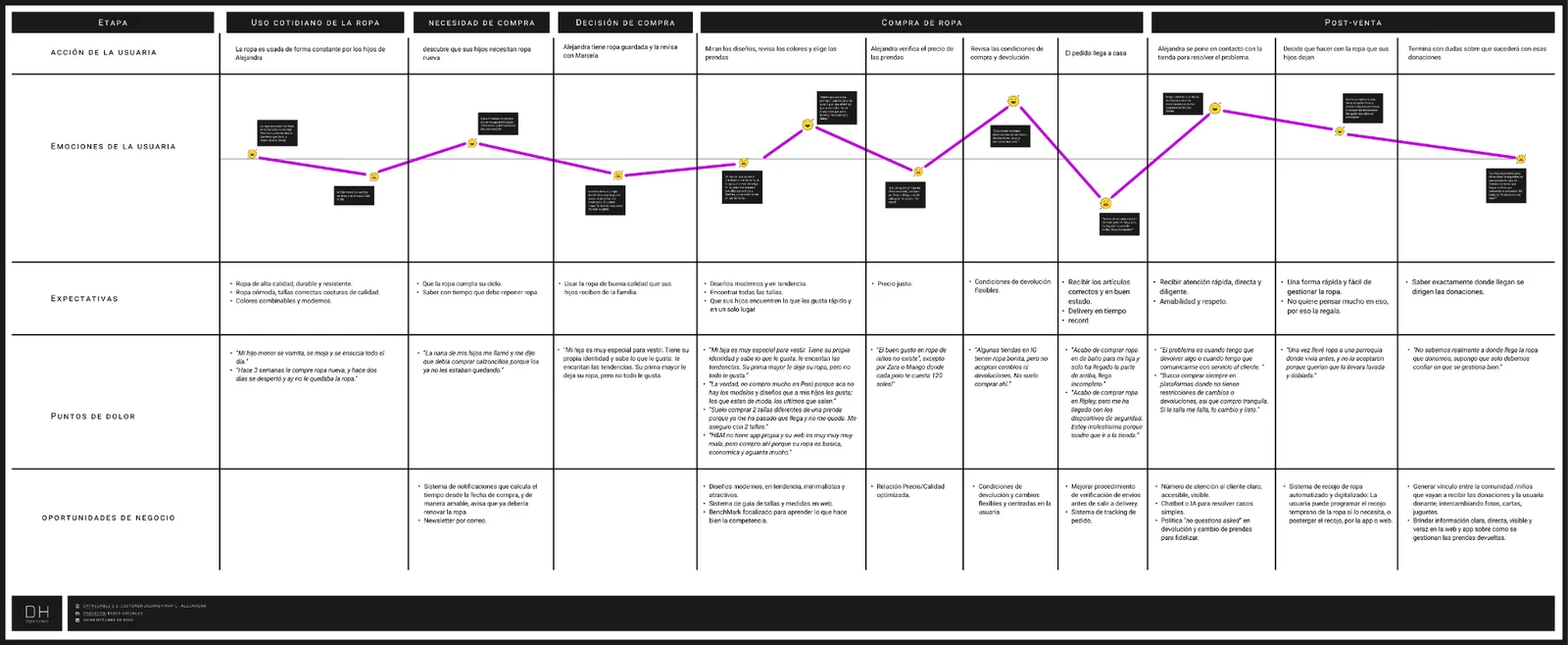
Alejandra’s journey: from needing clothes to post-purchase support.
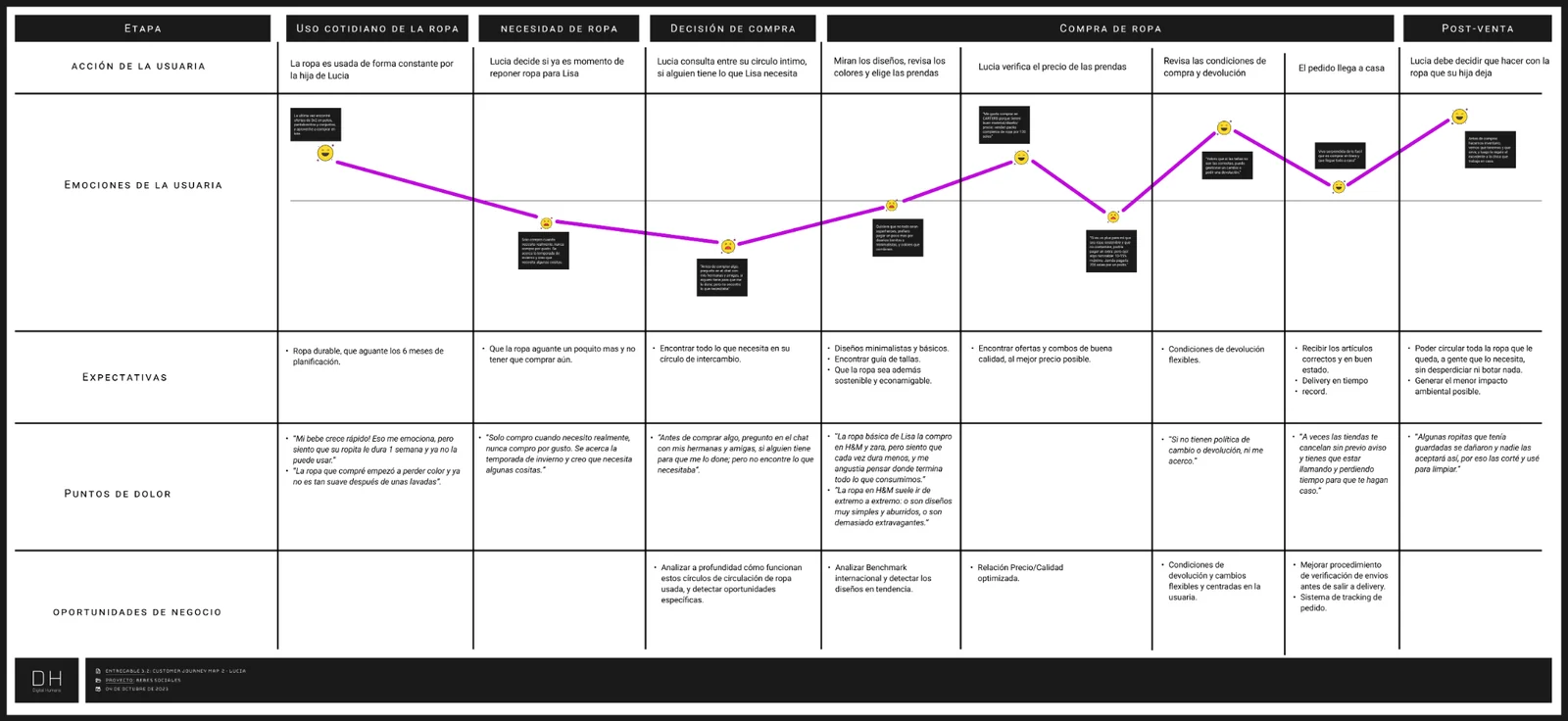
Lucía’s journey: purchase decisions, trust and reuse.
04
Benchmarking with specific questions
I reviewed references including Red Caribou, Nudnik and Liewood to examine navigation, catalogues, product information and value communication. I annotated strengths and friction to turn visual references into design criteria.
The size guide is one example: the benchmark contrasts contextual guidance with extensive tables embedded in the layout. For Kindberry, the criterion was to resolve uncertainty without overwhelming the page or losing product context.
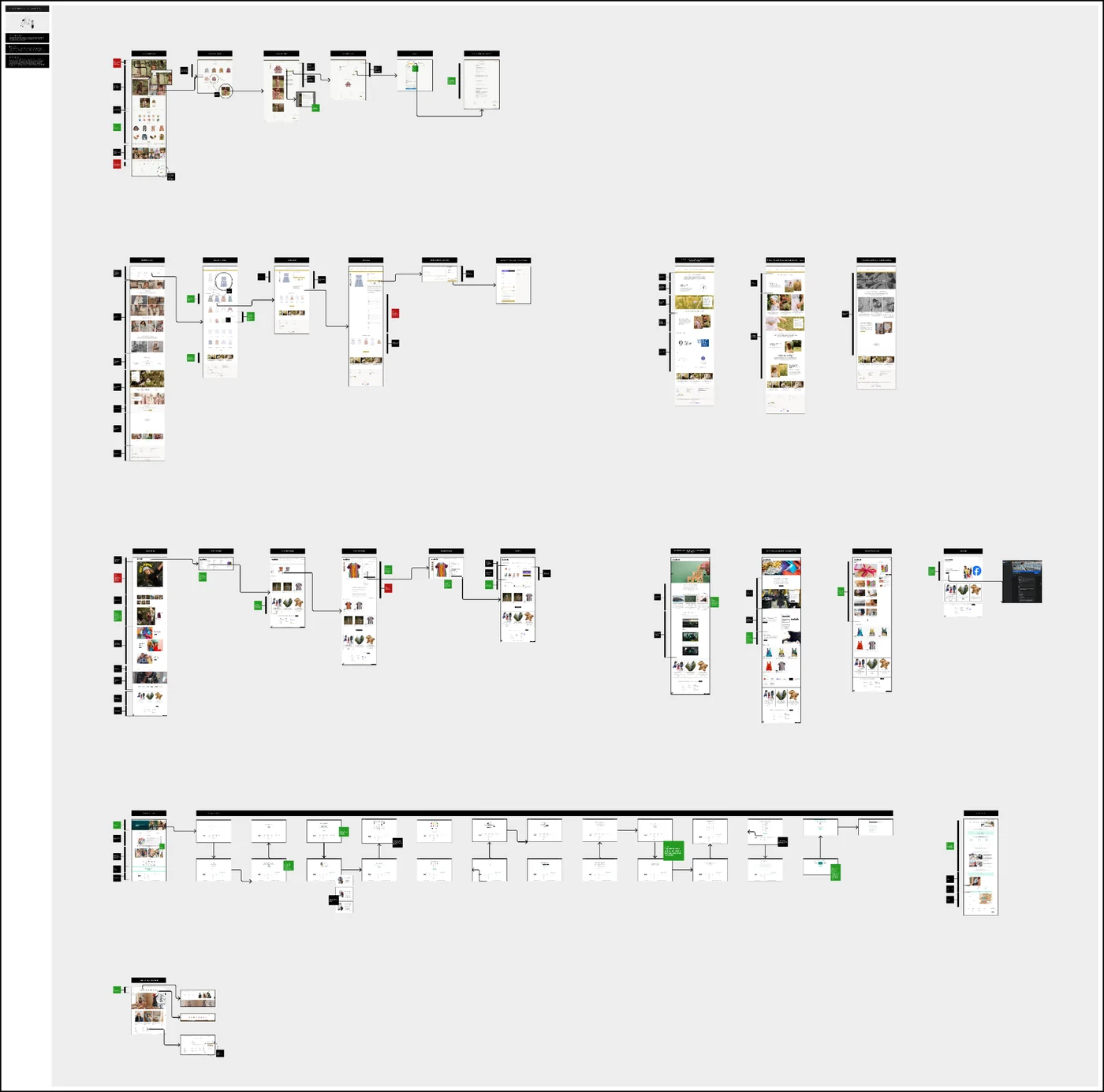
Overview of the benchmark and annotations.
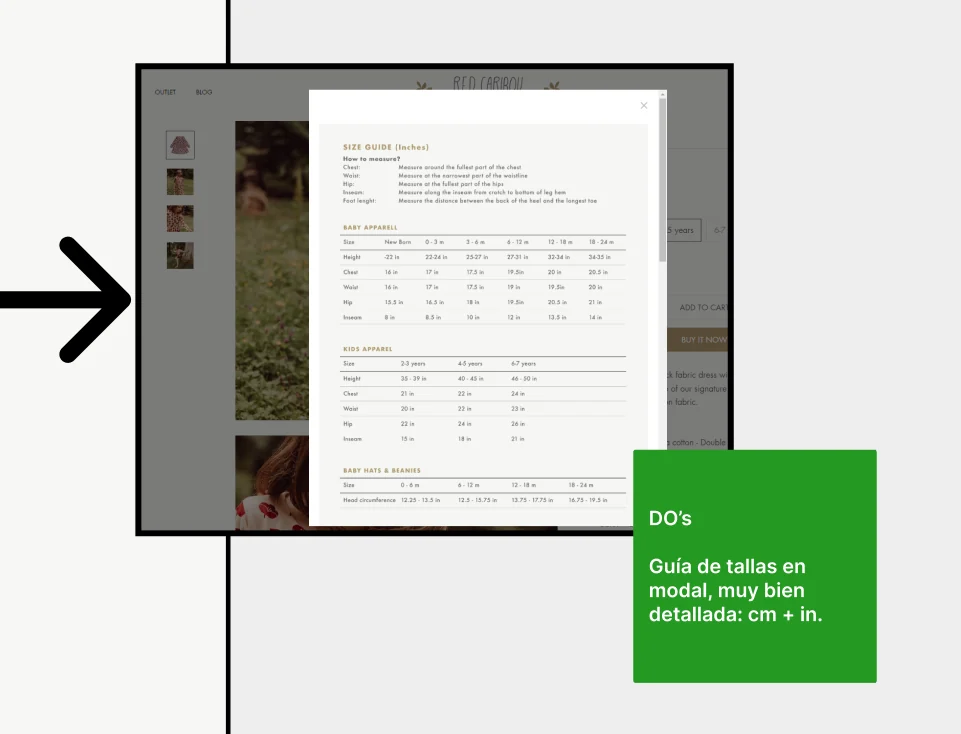
Analysed reference: size guidance at Red Caribou.
05
Aligning membership and the business model
The Business Model Canvas connects clothing sales, membership, benefits and community. The backlog captures an important decision: membership should not force purchases on a fixed schedule.
In the interface proposals, a monthly contribution becomes shopping credits and provides access to benefits. Communication needs to explain that exchange, recurrence and terms. The amounts and benefits shown belong to the design proposal.
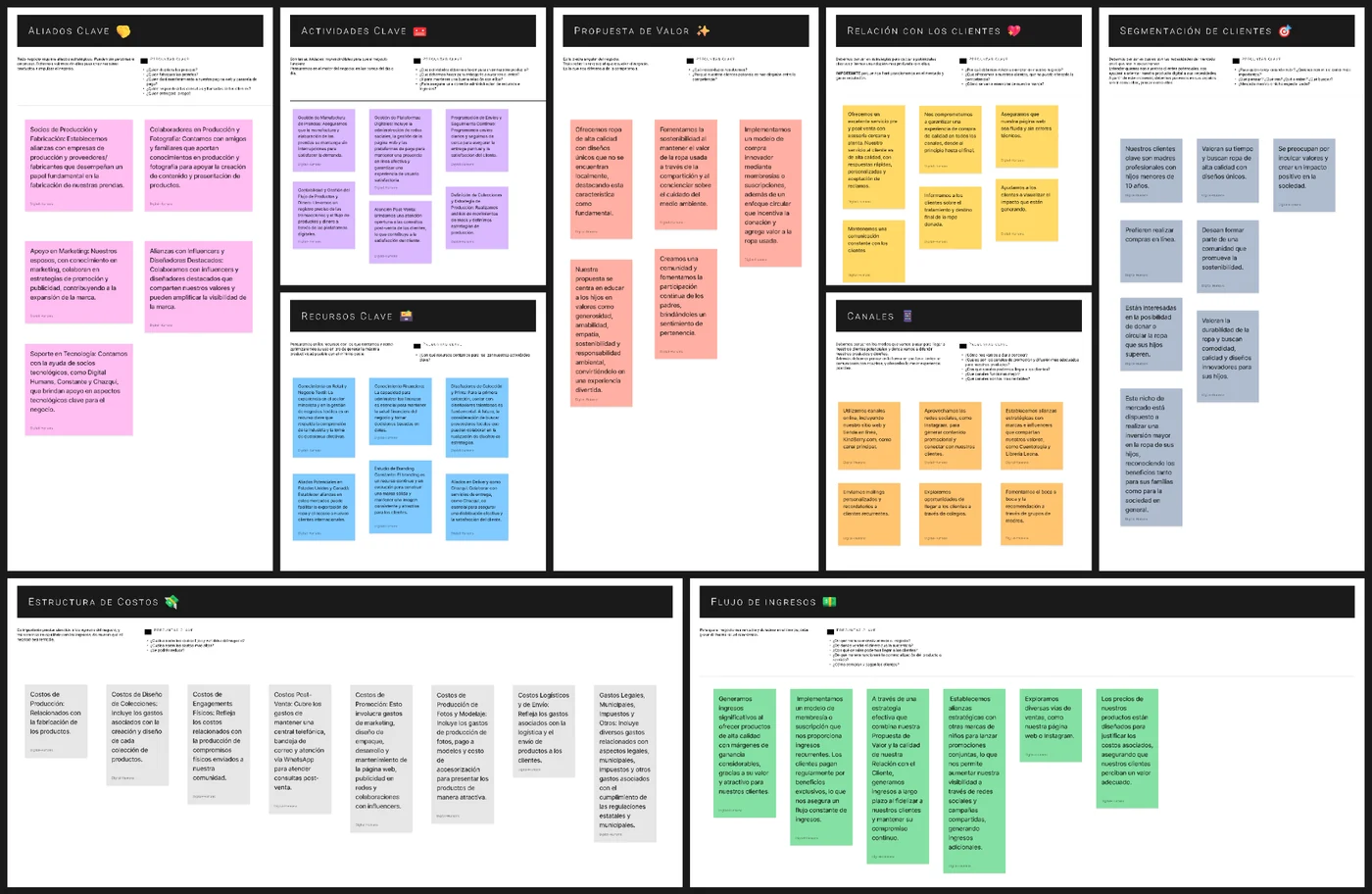
Business Model Canvas: relationships between the value proposition, community and revenue streams.
06
From research to flows and scope
I organised the backlog into three epics and 26 stories: clothing purchases, membership and social engagement. Navigation, sizing, cart and help needs sit alongside credit management, benefits and community participation.
Joining the community and viewing benefits flows translate that structure into concrete journeys. The backlog also retains business questions and options to define; not every story represents an implemented feature.
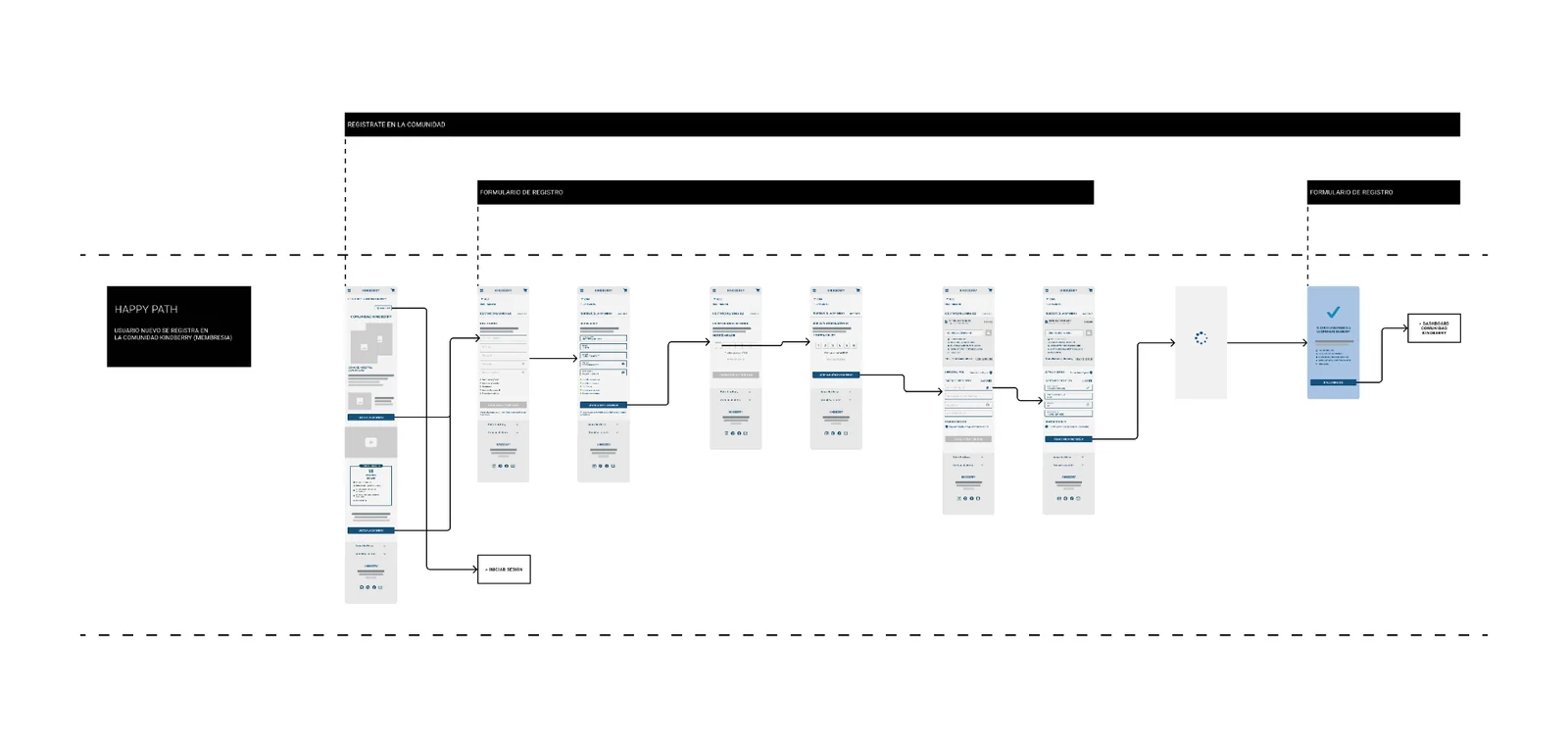
Wireframes of the journey to join the community.
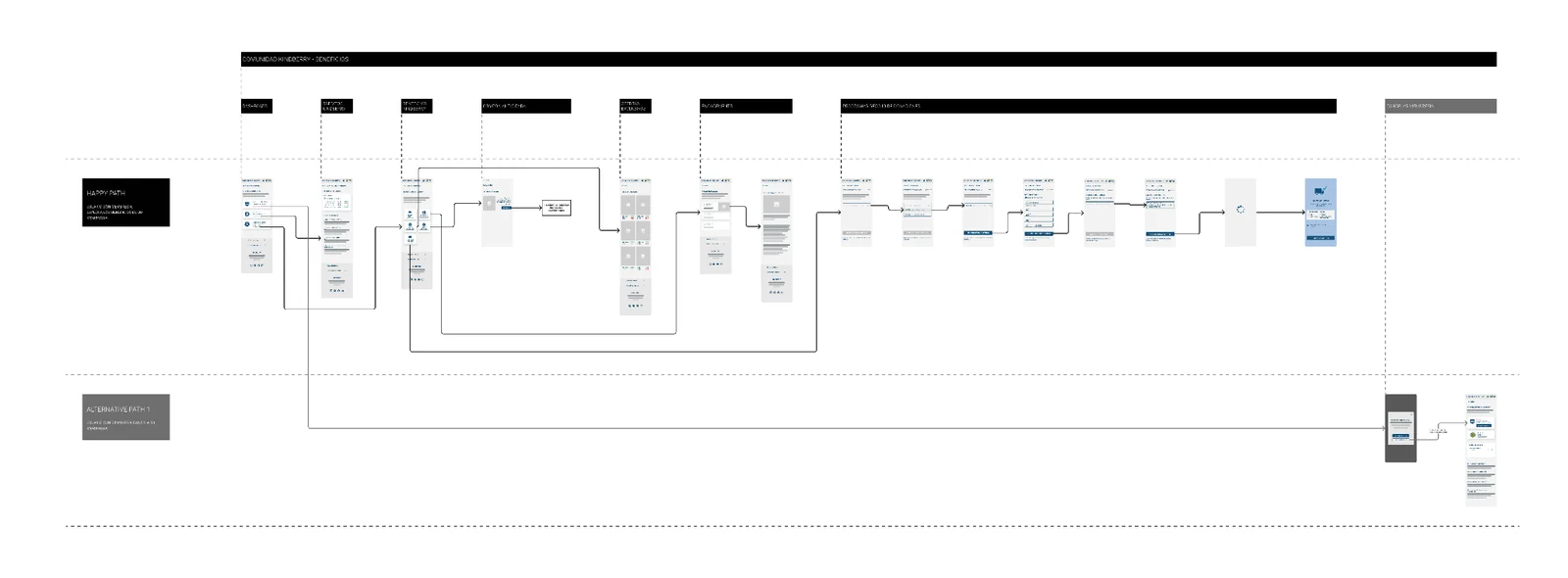
Wireframes for exploring and accessing benefits.
07
Decisions connecting the system
01Find first, explore details next
The catalogue includes category, size and price filters, sorting and colour variants. The product page brings size selection, quantity and details together before moving to the cart.
Decision
Separating browsing from detail helps keep the catalogue light without removing information needed for a decision.
02Connect community and shopping without conflating them
The community has its own explanation of contributions, credits and benefits. The catalogue includes entry points and indications of member benefits.
Decision
Prices and benefits need to be clearly distinguished for members and occasional shoppers.
03Make what happens after joining visible
The community area brings together account, credits, benefits and notifications. The designs include confirmation and error states for credit management.
Decision
An ongoing relationship proposition needs support and understandable states alongside an appealing landing page.
08
The proposal on web and mobile
The interface combines the brand’s warm identity with familiar shopping controls. The catalogue, community explanation and mobile views show how the different tasks connect.
Alternatives were explored for explaining membership. I show a proposal with grouped benefits here; it is not presented as the winner of a comparative test.
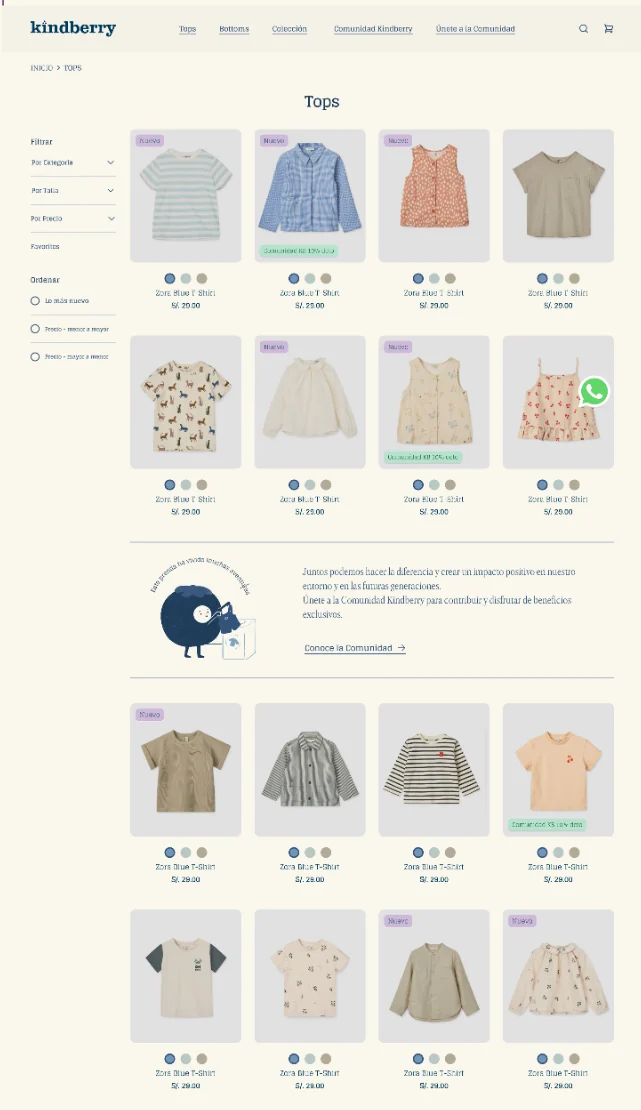
Catalogue excerpt: filters, variants and the community connection.
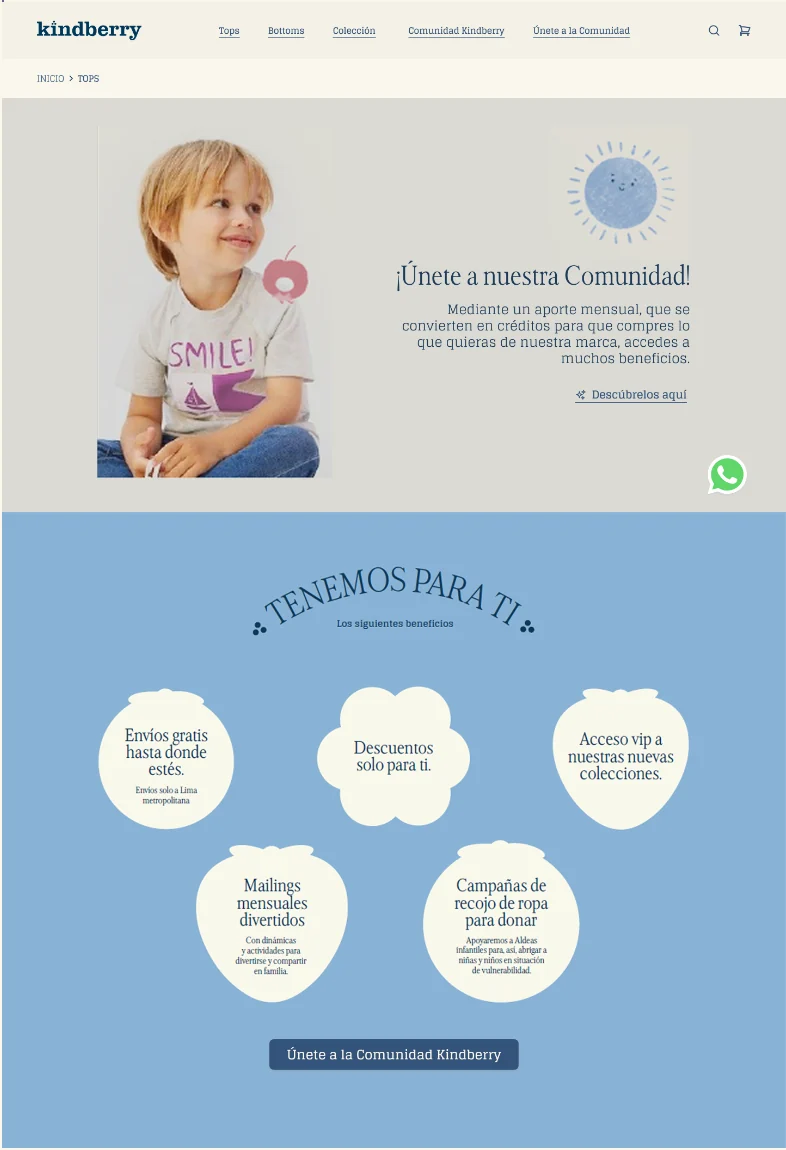
Proposal explaining membership and its benefits.
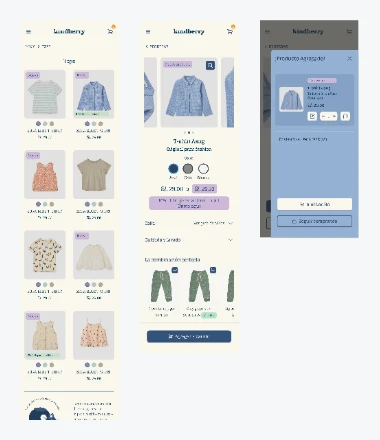
Excerpts of the catalogue, product page and cart on mobile.
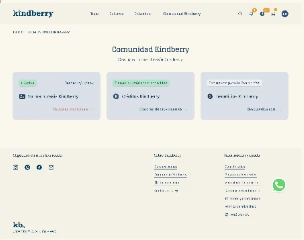
Community area with access to benefits and credit management.
09
A shared visual system
I documented typography, palette, shadows, iconography, and button and input states. These foundations connect the catalogue, shopping and community through a consistent visual language across web and mobile.
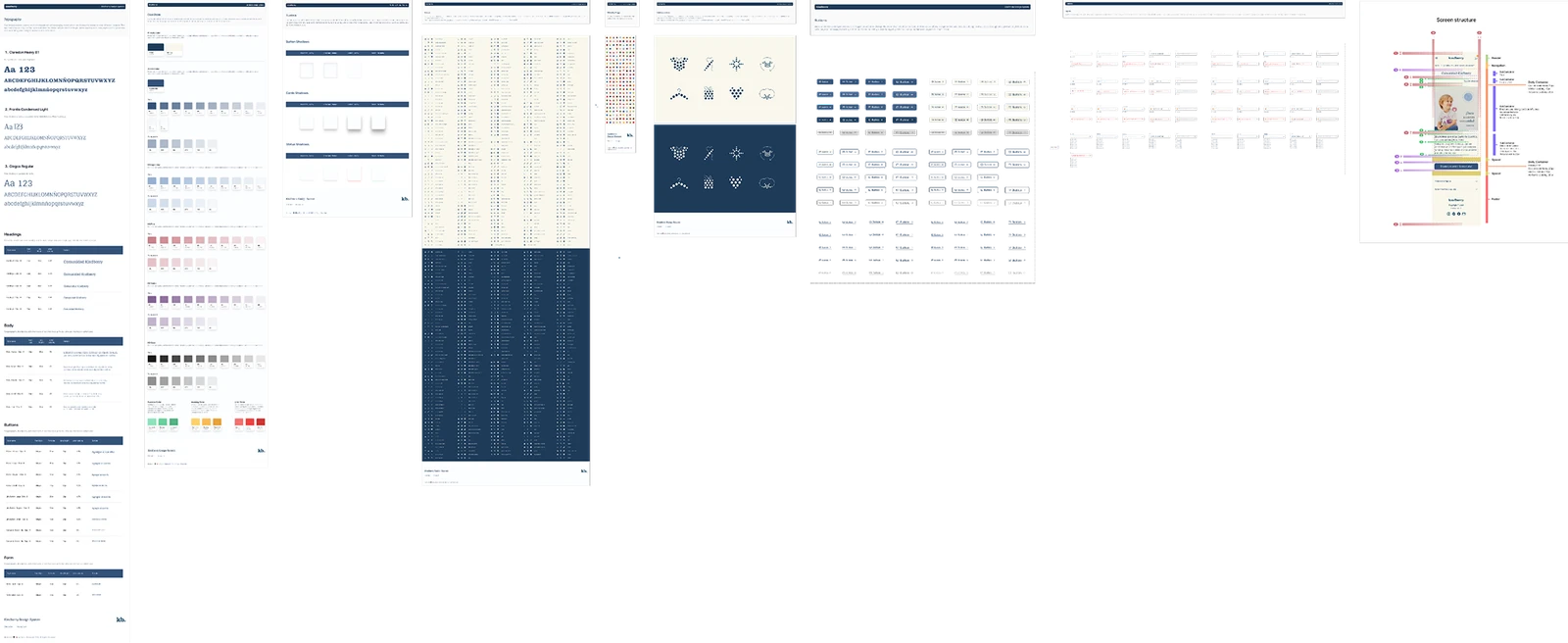
Overview of Kindberry’s Design System: foundations, components and screen structure.
10
Outcome and learnings
The process produced archetypes, journeys, a business model, user stories, flows and interface proposals connecting shopping and community. I do not have conversion metrics or launch evidence to attribute commercial impact.
The main learning was that business recurrence needs to coexist with families’ actual purchasing rhythms. Designing that relationship requires clear terms, freedom of choice and an experience that remains useful after payment.
Next case